

Moving your business to a new location is exciting, but an office move takes careful planning to keep operations running smoothly. There’s no shortage of details to manage, especially if your business move involves employee relocation.
No matter if you’re relocating across town or across the state, working with an experienced office moving company and making a comprehensive plan will protect valuable equipment, minimize downtime, and help your team settle into the new space.
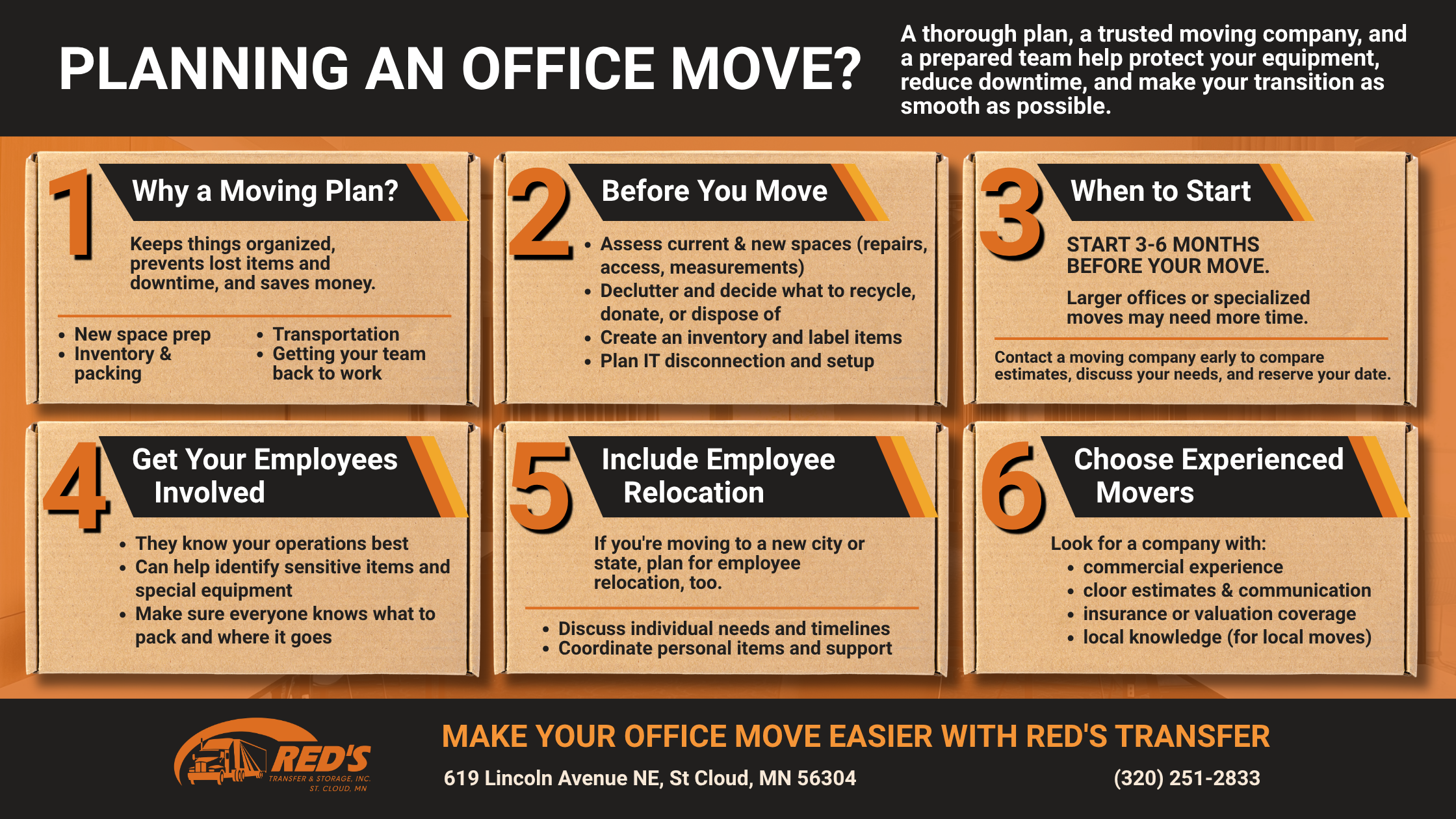
Why Your Office Needs a Moving Plan
An office move involves more than loading desks and boxes into a truck. Without a clear plan, important documents get misplaced, computers get damaged, and employees don’t know where to find essential supplies or equipment. These problems lead to lost productivity, unexpected expenses, and unnecessary frustration.
A moving plan gives everyone a shared timeline and clear responsibilities. It should cover preparing the new space, organizing inventory, coordinating transportation, and getting your team back to work—but that all takes time to plan. An experienced office moving company can help identify logistical challenges and develop a strategy that fits your business.
What to Do Before Your Office Move
Start by evaluating both your current office and your new location. Before moving furniture or equipment, take care of repairs, check building access requirements, and measure doorways, elevators, and rooms to make sure larger items will fit.
This is also a good opportunity to reduce clutter. Sort through unused equipment, broken furniture, outdated supplies, and unnecessary paperwork. Decide what should be recycled, donated, disposed of, or moved to the new location.
A smaller inventory makes business moving more efficient and controls costs. It also reduces the amount of time your local office movers need to spend packing and transporting items you no longer use.
Create an inventory of furniture, computers, files, and other important equipment. Label items according to their destination, and work with your IT team to plan how technology will be disconnected, transported, and set up again.
When Should You Start Planning Your Office Relocation?
Small businesses should start the planning process three to six months before moving day. Larger offices, multi-location business moves, and relocations involving specialized equipment may require additional preparation.
We recommend contacting a local office moving company several months before your planned relocation. Scheduling early gives you time to compare estimates, discuss your requirements, and reserve a moving date that works for your business. It also gives you room to adjust if something unexpected comes up.
Get Your Employees Involved
Your employees know how your office operates, and involving them in the planning process makes a real difference. They’re often the best people to identify sensitive documents, specialized equipment, or technology that requires special handling. Your IT team, for example, should help determine how servers and computers should be prepared for the move.
When employees have a role in the process, it becomes easier to organize the transition and reduce confusion on moving day. Make sure everyone knows what they should pack themselves, what the office moving company will handle, and where their belongings will go.
How Employee Relocation Fits Into Your Office Move
Sometimes an office move involves more than relocating furniture and equipment. If your business is moving to a different city or state, employee relocation may also be part of the process. Employees may need support coordinating their move, transporting personal belongings, or adjusting to a new work location.
Include employee relocation in your planning process to identify additional logistics and communicate expectations early. Talk with employees about their individual needs, timelines, and any equipment or personal items they may be responsible for moving.
Handling employee relocation on top of your business move can be a lot. Sometimes the best option is to contact an experienced local office mover to coordinate commercial moving services alongside employee relocation needs.
Choose Experienced Office Movers
Choosing the right office moving company is an important part of a successful relocation. Office moves often involve heavier furniture, specialized equipment, sensitive documents, and tighter scheduling requirements than residential moves.
An experienced commercial moving team can plan logistics, determine equipment and staffing needs, and coordinate transportation. Professional office relocation services also help reduce disruption by organizing the move around your business’s schedule.
When comparing movers, ask about their experience with commercial relocations, the services included in their estimates, insurance or valuation coverage, and how they handle unexpected issues. Look for clear communication, written estimates, and a track record of professional service.
Be cautious of vague pricing, unclear responsibilities, or companies that cannot explain how they will protect your equipment. For a local move, look for local office movers who understand the area and can coordinate with your building’s requirements.
Make Your Office Move Easier with Red’s Transfer
Whether you’re relocating a small office across town or moving an entire commercial facility across the country, Red’s Transfer has the experience and resources to help. Our team provides dependable office relocation services designed to keep your move organized and your business moving forward.
We’re here to make business moving simpler. If you need an experienced office moving company for your next relocation, contact Red’s Transfer today to discuss your plans and request a customized moving quote.